





Nerdy takeaways
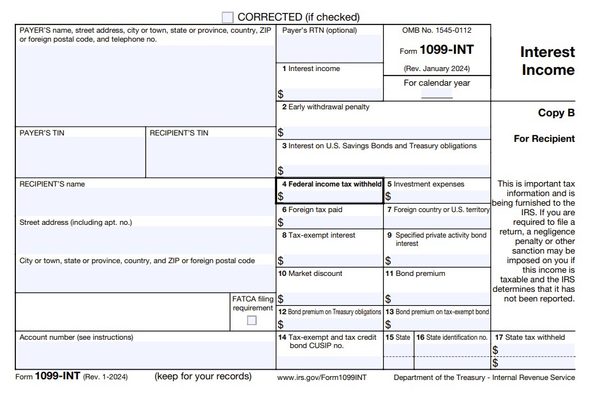
- The 1099-INT is a type of IRS form that shows how much interest an entity paid you throughout the year.
- You might receive a 1099-INT from your bank because it paid you interest on your savings.
- You'll use the information on a 1099-INT to fill in certain fields of your federal income tax return.
Sometime in February, you might receive a 1099-INT tax form (or more than one) in the mail. Whenever you get one of these, you should hang on to it, because it can have a big impact on your tax life.
What is a 1099-INT?
A 1099-INT tax form is a record that a person or entity paid you interest during the tax year. If you earned $10 or more in interest from a bank, brokerage or other financial institution, you’ll receive a 1099-INT.
Simply receiving this tax form doesn’t necessarily mean you owe taxes on that money. You might have tax deductions that offset the income, for example, or some or all of it might be sheltered based on characteristics of the asset that generated it.
In any case, the IRS and the state know about your interest income, because any entity that sends you a 1099-INT also has to send a copy of it to the IRS and a copy to the state. (This is one way the IRS and the state can tell if you haven't reported the income on your tax return.)


ADAdvertisement
Get matched to a financial advisor for free with NerdWallet Advisors Match.Match With an Advisor for free

ADAdvertisement
Get matched to a financial advisor for free with NerdWallet Advisors Match.Get Matched for Free
ADAdvertisementWhat to do with a 1099-INT tax form
You'll use your Form 1099-INT to help fill out your annual income tax return. Box 1 of your 1099-INT shows how much interest income you were paid throughout the year, which you'll need handy when filing your return.
If you need help estimating how interest income on a Form 1099-INT could affect your tax bill, check out our free tax calculator.
What does my 1099-INT form mean?
Receiving a 1099-INT usually means somebody paid you interest during the year, and it means you probably need to report that interest income on your tax return and possibly pay taxes on it.
If you received this tax form from a bank or other entity because you have investments or accounts that earned interest, you might also get a few other types of 1099 tax forms in the mail.
1099-DIV
The 1099-DIV reports dividends you received. This doesn’t include dividends on a share account at a credit union. The IRS considers those interest, so they appear on the 1099-INT.
1099-OID
You might receive Form 1099-OID if you bought bonds, notes or other financial instruments at a discount to the face value or redemption value at maturity. Typically, the instrument must have a maturity of more than one year.
1099-R
If you got distributions from a pension, retirement plan, profit-sharing program, an IRA or an annuity, you might receive a 1099-R. (Remember, many retirement plans are tax-advantaged, so this form might be simple record-keeping on behalf of the IRS.) If you took a loan from your retirement plan, you might have to treat it as a distribution, which means it might be on this form, too, as well as permanent and total disability payments under life insurance contracts.
AD
10 Ways the Tax Code Trips Up High Earners
The more you earn, the more complex your taxes become. Learn the 10 traps to dodge.

on NerdWallet Wealth Partners' site. For informational purposes only. NerdWallet Wealth Partners does not provide tax or legal advice.