

SBA Loan Calculator: Estimate Payments on 7(a), 504 Loans
Use our calculator to estimate the total costs of an SBA loan, including monthly payments, interest and guarantee fees.
Many, or all, of the products featured on this page are from our advertising partners who compensate us when you take certain actions on our website or click to take an action on their website. However, this does not influence our evaluations. Our opinions are our own. Here is a list of our partners and here's how we make money.








Government-backed SBA loans offer low interest rates and long repayment terms, which can make them a great way to fund your business. But like with all small-business loans, you should understand the true cost of financing before taking on any new debt.
Use our SBA loan calculator to estimate total financing costs.
How to use the SBA loan calculator
1. Select your SBA loan type
Choose from three options:
SBA 7(a) loan. This is the most common type of SBA loan. SBA 7(a) loans can be used for working capital, business expansion, debt consolidation or buying real estate or equipment. These loans are usually issued by banks.
SBA Express loan. SBA Express loans are SBA 7(a) loans of up to $500,000 that can be approved more quickly than standard 7(a) loans.
SBA 504 loan. SBA 504 loans have very long terms — up to 25 years — and can be used to finance real estate or equipment purchases. They are funded by certified development companies (CDCs) and financial institutions. You’ll need to put at least 10% down.
» MORE: Can you have multiple SBA loans?
How much do you need?
We’ll start with a brief questionnaire to better understand the unique needs of your business.
Once we uncover your personalized matches, our team will consult you on the process moving forward.
2. Enter your loan amount
This is the total amount you’re borrowing, before any down payment is applied.
Although loan amounts vary, each SBA loan type is subject to a maximum funding limit:
SBA 7(a) loans are available up to $5 million.
SBA Express loans are available up to $500,000.
SBA 504 loans are available up to $5.5 million.
3. Choose your loan term
This is how long you’ll have to pay the loan back in full.
Maximum repayment terms are based on how you plan to use the loan.
For SBA 7(a) and Express loans, the maximum repayment terms are up to 25 years for real estate, 10 years for equipment and 10 years for working capital or inventory loans.
For 504 loans, repayment terms are 10, 20 or 25 years, depending on what you’re using the loan for.
A longer repayment window can help keep monthly payments low, but you’ll pay more in total interest over the life of the loan. You may be able to repay an SBA loan early to save on interest, but watch out for any prepayment penalties.
4. Enter your interest rate
This is the cost the lender charges you for the loan and is based on a percentage of the amount you’re borrowing.
You negotiate SBA loan rates with your lender, but the SBA sets maximum rates lenders are allowed to charge for 7(a) loans. If you already know your rate, enter it in the calculator. If not, you can go with an estimate to get an idea of payments and costs.
Here are the maximum rates the SBA allows lenders to charge for SBA 7(a) loans:
Fixed rates:
SBA loan size | Maximum interest rate |
|---|---|
$25,000 or less | 14.75%. |
$25,001 to $50,000 | 13.75%. |
$50,001 to $250,000 | 12.75%. |
$250,001 or more | 11.75%. |
*Rates calculated with the current prime rate of 6.75%. Updated July 2026. | |
Variable rates:
SBA loan size | Maximum interest rate |
|---|---|
$50,000 or less | 13.25%. |
$50,001 to $250,000 | 12.75%. |
$250,001 to $350,000 | 11.25%. |
$350,001 or more | 9.75%. |
*Rates calculated with the current prime rate of 6.75%. Updated July 2026. | |
SBA loan rates for 7(a) loans (including Express loans) are calculated based on the daily prime rate plus a lender spread. 7(a) loan interest rates can be either fixed or variable. This calculator assumes a fixed rate.
For SBA 504 loans, interest rates are based on the market rate for 10-year U.S. Treasury bonds. They typically range from 5% to 7%. Rates are fixed for the life of the loan.
5. Add your down payment
This is the amount you’ll need to pay the lender upfront before receiving the loan. It’s represented as a percentage of the total loan amount.
SBA 504 loans require a down payment of at least 10%, while down payments for SBA 7(a) and Express loans vary depending on the lender.
Because you pay this amount up front, you don’t need to finance it, and it doesn’t count toward your loan total.
6. Calculate your results
Once you’ve added the above variables, click “calculate” to generate the following results. Play around with the numbers to explore different scenarios.
Monthly payment | This is the amount you’ll owe your lender each month. It includes payment toward your principal, interest and guarantee fee. |
Total payments | This is the total amount you will pay back over the life of the loan. It includes the amount you borrowed, plus interest and guarantee fee. |
Total interest paid | This is the total amount you will pay your lender in interest. Repaying your loan early can help you save on interest — as long as your lender doesn’t charge prepayment penalties. The SBA also charges prepayment penalties if you prepay within the first three years of your loan term, if the total loan term is 15 years or longer. |
Guarantee fee | The SBA guarantee fee is a common fee lenders typically pass onto borrowers for SBA 7(a) and 504 loans, either adding it to the loan balance or as a separate charge. This calculator adds the fee to the total loan amount. Veteran business owners seeking Express loans don’t have to pay this fee. |
Down payment | This is what you’ll pay your lender before receiving the loan. The down payment reduces the total loan amount, since you pay this portion yourself. |
Amortization schedule | This represents how much of each monthly payment will go toward your principal and how much will be spent on interest. Over time, your monthly payment will remain the same, but your interest payments will get smaller and more of your payment will go toward your principal. This calculator lets you download your amortization schedule as a CSV file. |
What SBA loan costs can look like
Here’s how average-sized SBA 7(a), SBA Express and SBA 504 loans compare.
SBA 7(a) loan | SBA Express | SBA 504 | |
|---|---|---|---|
Loan amount | $750,000 | $100,000 | $1,200,000 |
Loan term (years) | 10 | 10 | 25 |
Interest rate | 11.75% | 12.75% | 5% |
Down payment | 10% | 10% | 10% |
Monthly payment | $9,802.70 | $1,343.86 | $6,326.20 |
Total payments | $1,176,323.49 | $161,263.20 | $1,897,859.88 |
Total interest | $486,135.99 | $70,363.20 | $815,699.88 |
Loan amounts were determined by using average loan sizes from the SBA’s 7(a) and 504 Lender Report, accessed July 15, 2026. Figures reflect lending activity for fiscal year 2026 to date, which began Oct. 1, 2025. | |||
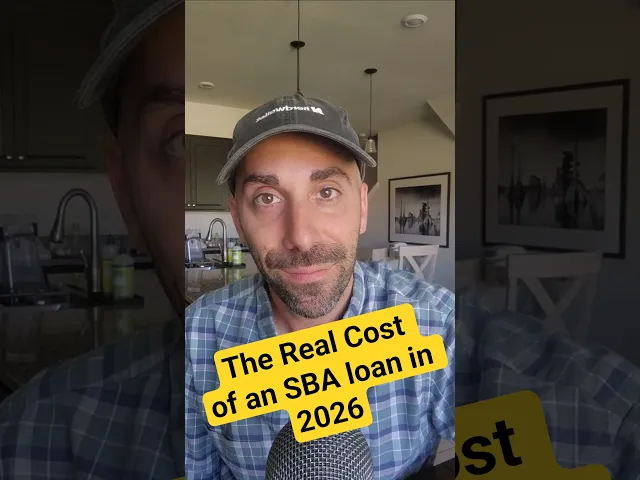
See our calculator in action in the video below:
Limitations with our SBA loan calculator
As with any business loan calculator, your actual payments and interest costs may differ from what you see here. Here are a few reasons why.
Lenders may charge extra fees
While this calculator factors in SBA guarantee fees, your lender may charge additional fees, like service and packaging fees, filing and recording fees, and late payment fees. Lenders can also seek SBA approval to charge extra fees if a loan requires a high amount of administrative work.
Your actual interest rate may vary
If you put in an estimated interest rate, your payment and interest amounts will likely be different from what you see in our calculator.
That’s because your actual interest rates will depend on lots of factors, such as the lender, loan size, your personal and business qualifications and more.
Also, if your SBA loan has a variable rate, your payments and interest costs are subject to change over time as your interest rate goes up or down.
Special rules or exceptions may apply
The SBA has many different loan programs and rules and exceptions for different industries and how loans are used. For example, this calculator doesn’t take into account that guarantee fees are waived for certain manufacturers or veteran business owners seeking SBA Express loans.
How to qualify for an SBA loan
SBA loan requirements vary depending on the lender you’re working with and which loan program you’re applying for.
All SBA loans require the following, though:
You must be a for-profit business.
You must have invested your own time and money, or another form of equity, into your business.
You have to explain what you plan to use the funds for and why you need the financing.
You must be a small business. The SBA’s definition of “small business” depends on your annual revenue or number of employees and varies depending on your industry
Small Business Administration. Table of size standards. Accessed Jul 17, 2026.. You can see the SBA’s business size definitions here.
You’ll also likely need a good credit score, at least two years in business and strong annual revenue to qualify.
Is an SBA loan right for me?
SBA loans can be one of the most affordable small-business financing options. But they’re not right for every business.
If most of these apply to you, an SBA loan may be a good option:
✅ You meet basic SBA eligibility requirements and have a good credit score with an established business.
✅ You want a competitive interest rate but don’t qualify for a traditional bank loan.
✅ You’re willing to go through an application and funding process that may stretch a month or longer.
✅ You aren’t prepared to put down a typical 20% down payment.
✅ You want flexibility in how you use the loan funds.
✅ Your business can comfortably afford to take on new debt, and you have a backup plan if cash flow gets tight.
As you explore your options, it’s important to keep in mind that loan features — amounts, repayment terms, interest rates and fees — vary based on your lender and qualifications. That’s why you should compare several options to find the best deal for your business. Check out our list of best SBA lenders to get started.
Learn more about SBA loans:
Frequently asked questions
MORE CALCULATORS