

Treasury Bonds: How They Work, Where to Purchase
U.S. Treasury bonds are low-risk, fixed-income securities known for the safety and liquidity they bring to portfolios.

Many, or all, of the products featured on this page are from our advertising partners who compensate us when you take certain actions on our website or click to take an action on their website. However, this does not influence our evaluations. Our opinions are our own. Here is a list of our partners and here's how we make money.
The investing information provided on this page is for educational purposes only. NerdWallet, Inc. does not offer advisory or brokerage services, nor does it recommend or advise investors to buy or sell particular stocks, securities or other investments.








You may be familiar with stocks, ETFs and index funds — the usual suspects that form the backbone of a portfolio. When you buy these types of securities, you're betting that the performance of the underlying company improves, thus earning you a return.
But that's not the only way to invest.
You can also buy what are known as debt securities, or bonds. This is how they work: you lend money to an entity with the expectation that you'll get your principal plus some interest back in return. The general concept is similar to how credit cards function — except in this situation, you are the creditor.
The U.S. government offers several types of debt securities you can invest in, with Treasury bonds being one of the most popular types.
How do Treasury bonds work?
U.S. Treasury bonds are long-term debt securities issued by the U.S. government. They are available in 20- or 30-year contracts, giving them a relatively long maturity timeline compared to other securities like Treasury bills and notes.
But that doesn't mean you won't earn anything on your loan for the entire period. The U.S. government will pay you interest on the bond semi-annually (twice a year) until it reaches full maturity at the 20- or 30-year mark, which is also when you'll get your full principal back.
Treasury bonds are considered budget-friendly for investors, since they can be purchased in increments of $100. When evaluating one, you'll want to look at the yields, which are listed by each contract. Higher yields mean you'll earn more interest on the money you lend.
However, don't expect astronomical returns — Treasury bonds have lower returns relative to higher-risk securities, like stocks, because of their fixed-income nature. Still, even during periods of low yields, U.S. Treasury bonds remain sought-after because of their perceived stability, liquidity, or ease of conversion into cash.
Are Treasury bonds safe?
Treasury bonds are considered low-risk investments and are generally risk-free when held to maturity because they're issued and backed by the U.S. government. Since the U.S. government must find a way to repay the debt (and always has so far), the odds of Treasury bonds defaulting are extremely low.
However, longer-term bonds are more susceptible to what's known as interest rate risk. Basically, this means that the value of your bond (what you'd be able to sell it for) could go down if interest rates rise. Why? Because if you're holding a bond with a 4% yield, and new-issue bonds offer 5%, investors would rather buy that new issue than your existing bond. And with lower demand, its price falls. If you're planning to hold to maturity, this isn't much of an issue. But with 20- and 30-year bonds, just remember a lot can happen in that long timeline, and for these securities, interest rate risk is very real.
What are the tax benefits of Treasury bonds?
Treasury bonds are tax-advantaged. Interest income earned from Treasury bonds is subject to federal income taxes, but it is exempt from state and local income taxes.
Where do I purchase Treasury bonds?
You can purchase Treasury bonds directly from the Treasury Department through its website. TreasuryDirect releases the bond auction schedule that includes information about Treasury interest rates and maturity dates.
However, if you already have a brokerage account, you may be able to review available contracts and purchase Treasurys there as well. The advantage here is a smoother purchasing experience and having your investments all in one location.
Some brokerage accounts allow you to purchase Treasurys via auction (aka through Treasury Direct), but many also allow you to purchase Treasurys through the secondary market (aka from a marketplace of people who are offloading Treasurys early).
You can also gain exposure to Treasurys through mutual funds or exchange-traded funds. If you have no particular time frame in mind for repayment, investing in a mutual fund or ETF may be more appealing because of enhanced diversification from owning a collection of bonds. However, unlike individual Treasury bonds, bond funds do not have a maturity date and can therefore be subject to greater volatility/market fluctuations.
Brokerage firms | |
|---|---|
What if I need to sell a Treasury bond before it matures?
If you need to sell a Treasury bond before the expiration or maturity date, you can sell it on the secondary market.
If your original purchase happened on TreasuryDirect, you'll need to wait at least 45 days after purchase to sell
The risk of selling a Treasury bond on the secondary market before it matures is that you may not recoup your principal in the original amount since the bond might be worth less at the time of your sale (that's the interest rate risk we discussed earlier).
Are Treasury bonds better than bills or notes?
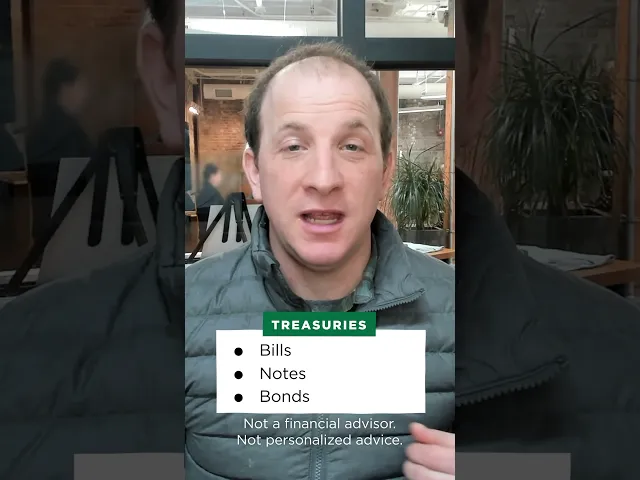
Although the term "Treasury bonds" is often used as a catchall term for all government Treasury securities, there are two other types that are most popular: Treasury bills and Treasury notes.
They all operate around the same rules — the main difference is that each one has a different length of time until maturity, or expiration. Treasury bills mature in less than one year, while Treasury notes mature in two, three, five, seven and 10 years.
Generally speaking, the longer the term, the higher the yield, so bonds may give you the biggest bang for your buck, but the obvious caveat is that you won't get your principal back for a much longer time, so which security makes sense for you will depend on your goals and circumstances.
So, are Treasury bonds a good investment?
Generally, yes, but that depends on your investing goals, your risk tolerance and your portfolio's makeup. With investing, in many cases, the higher the risk, the higher the potential return. This applies here.
Asset allocation is an investing concept and portfolio strategy for how to spread investment dollars among various asset classes, or groups of similar investments. Of the three most common — equities, bonds and cash — equities generally provide the greatest long-term growth potential, but are the most volatile. Cash has the least risk and lowest return to buffer volatility or cover unexpected expenses.
Bonds, like Treasurys, can generate income, usually have more modest returns, and can help balance out the volatility of stocks. Bonds are a common asset in a well-diversified portfolio.