Senior writer | Small business banking and credit cards, Paycheck Protection Program, consumer spending, and household finances
Kelsey Sheehy is a NerdWallet authority on small business. Her work has appeared in The New York Times, The Washington Post, Nasdaq and MarketWatch, among other publications. Kelsey has appeared on the <a href="https://www.today.com/video/christmas-in-july-sales-to-take-advantage-of-now-64075333536">"Today"</a> show, <a href="https://www.nbcnews.com/nightly-news/video/tax-code-changes-leave-many-americans-with-unhappy-returns-1440385091860">NBC News</a> and <a href="https://abcnews.go.com/WNT/video/cost-smartphones-reaching-time-high-54166111">"ABC World News Tonight"</a> and has been quoted by the Los Angeles Times, CNBC and American Banker, among other publications. Email: <a href="mailto:ksheehy@nerdwallet.com">ksheehy@nerdwallet.com</a>.
Senior writer | Small business banking and credit cards, Paycheck Protection Program, consumer spending, and household finances
Kelsey Sheehy is a NerdWallet authority on small business. Her work has appeared in The New York Times, The Washington Post, Nasdaq and MarketWatch, among other publications. Kelsey has appeared on the <a href="https://www.today.com/video/christmas-in-july-sales-to-take-advantage-of-now-64075333536">"Today"</a> show, <a href="https://www.nbcnews.com/nightly-news/video/tax-code-changes-leave-many-americans-with-unhappy-returns-1440385091860">NBC News</a> and <a href="https://abcnews.go.com/WNT/video/cost-smartphones-reaching-time-high-54166111">"ABC World News Tonight"</a> and has been quoted by the Los Angeles Times, CNBC and American Banker, among other publications. Email: <a href="mailto:ksheehy@nerdwallet.com">ksheehy@nerdwallet.com</a>.
Ryan Lane is an editor on the small-business team and a NerdWallet authority on student loans. He spent more than a decade as a writer and editor for student loan guarantor American Student Assistance and was a managing editor for publisher Cell Press. Ryan’s work has been featured by The Associated Press, USA Today and MarketWatch, and he previously co-authored the U.S. News & World Report Student Loan Ranger blog. Email: <a href="mailto:rlane@nerdwallet.com”">rlane@nerdwallet.com</a>.
Ryan Lane is an editor on the small-business team and a NerdWallet authority on student loans. He spent more than a decade as a writer and editor for student loan guarantor American Student Assistance and was a managing editor for publisher Cell Press. Ryan’s work has been featured by The Associated Press, USA Today and MarketWatch, and he previously co-authored the U.S. News & World Report Student Loan Ranger blog. Email: <a href="mailto:rlane@nerdwallet.com”">rlane@nerdwallet.com</a>.
NerdWallet's content is
fact-checked for accuracy, timeliness, and relevance by humans.
It undergoes a thorough review process involving writers and editors to ensure
the information is as clear and complete as possible. Learn more by checking
our
Editorial Guidelines.
Content was accurate at the time of publication.
Why trust NerdWallet
250+ small-business products reviewed and rated by our team of experts.
80+ years of combined experience covering small business and personal finance.
Objective comprehensive business credit card ratings rubric (Methodology).
NerdWallet's business credit card content, including our ratings, reviews and recommendations, is overseen by a team of writers and editors who specialize in business credit cards. Their work has appeared in The Associated Press, Washington Post, MarketWatch, Nasdaq, Entrepreneur, ABC News, MSN and other national and local media outlets. Each writer and editor follows NerdWallet's strict editorial guidelines to ensure fairness and accuracy in our coverage. We independently evaluate and rate dozens of small-business credit cards, scoring them on fees, rewards rates, bonus offers and other features to help you choose the best business card for your company.
Advertiser disclosure
You're our first priority.
Every time.
We believe everyone should be able to make financial decisions with
confidence. While we don’t cover every company or financial product on
the market, we work hard to share a wide range of offers and objective
editorial perspectives.
So how do we make money? Our partners compensate us for advertisements
that appear on our site. This compensation helps us provide tools and
services - like free credit score access and monitoring. With the
exception of mortgage, home equity and other home-lending products or
services, partner compensation is one of several factors that may affect
which products we highlight and where they appear on our site. Other
factors include your credit profile, product availability and
proprietary website methodologies.
However, these factors do not influence our editors’ opinions or ratings, which are based on independent research and analysis. Our partners cannot
pay us to guarantee favorable reviews.
Here is a list of our partners.
Senior writer | Small business banking and credit cards, Paycheck Protection Program, consumer spending, and household finances
Kelsey Sheehy is a NerdWallet authority on small business. Her work has appeared in The New York Times, The Washington Post, Nasdaq and MarketWatch, among other publications. Kelsey has appeared on the <a href="https://www.today.com/video/christmas-in-july-sales-to-take-advantage-of-now-64075333536">"Today"</a> show, <a href="https://www.nbcnews.com/nightly-news/video/tax-code-changes-leave-many-americans-with-unhappy-returns-1440385091860">NBC News</a> and <a href="https://abcnews.go.com/WNT/video/cost-smartphones-reaching-time-high-54166111">"ABC World News Tonight"</a> and has been quoted by the Los Angeles Times, CNBC and American Banker, among other publications. Email: <a href="mailto:ksheehy@nerdwallet.com">ksheehy@nerdwallet.com</a>.
Senior writer | Small business banking and credit cards, Paycheck Protection Program, consumer spending, and household finances
Kelsey Sheehy is a NerdWallet authority on small business. Her work has appeared in The New York Times, The Washington Post, Nasdaq and MarketWatch, among other publications. Kelsey has appeared on the <a href="https://www.today.com/video/christmas-in-july-sales-to-take-advantage-of-now-64075333536">"Today"</a> show, <a href="https://www.nbcnews.com/nightly-news/video/tax-code-changes-leave-many-americans-with-unhappy-returns-1440385091860">NBC News</a> and <a href="https://abcnews.go.com/WNT/video/cost-smartphones-reaching-time-high-54166111">"ABC World News Tonight"</a> and has been quoted by the Los Angeles Times, CNBC and American Banker, among other publications. Email: <a href="mailto:ksheehy@nerdwallet.com">ksheehy@nerdwallet.com</a>.
Ryan Lane is an editor on the small-business team and a NerdWallet authority on student loans. He spent more than a decade as a writer and editor for student loan guarantor American Student Assistance and was a managing editor for publisher Cell Press. Ryan’s work has been featured by The Associated Press, USA Today and MarketWatch, and he previously co-authored the U.S. News & World Report Student Loan Ranger blog. Email: <a href="mailto:rlane@nerdwallet.com”">rlane@nerdwallet.com</a>.
Ryan Lane is an editor on the small-business team and a NerdWallet authority on student loans. He spent more than a decade as a writer and editor for student loan guarantor American Student Assistance and was a managing editor for publisher Cell Press. Ryan’s work has been featured by The Associated Press, USA Today and MarketWatch, and he previously co-authored the U.S. News & World Report Student Loan Ranger blog. Email: <a href="mailto:rlane@nerdwallet.com”">rlane@nerdwallet.com</a>.
NerdWallet's content is
fact-checked for accuracy, timeliness, and relevance by humans.
It undergoes a thorough review process involving writers and editors to ensure
the information is as clear and complete as possible. Learn more by checking
our
Editorial Guidelines.
Content was accurate at the time of publication.
Why trust NerdWallet
250+ small-business products reviewed and rated by our team of experts.
80+ years of combined experience covering small business and personal finance.
Objective comprehensive business credit card ratings rubric (Methodology).
NerdWallet's business credit card content, including our ratings, reviews and recommendations, is overseen by a team of writers and editors who specialize in business credit cards. Their work has appeared in The Associated Press, Washington Post, MarketWatch, Nasdaq, Entrepreneur, ABC News, MSN and other national and local media outlets. Each writer and editor follows NerdWallet's strict editorial guidelines to ensure fairness and accuracy in our coverage. We independently evaluate and rate dozens of small-business credit cards, scoring them on fees, rewards rates, bonus offers and other features to help you choose the best business card for your company.
Advertiser disclosure
You're our first priority.
Every time.
We believe everyone should be able to make financial decisions with
confidence. While we don’t cover every company or financial product on
the market, we work hard to share a wide range of offers and objective
editorial perspectives.
So how do we make money? Our partners compensate us for advertisements
that appear on our site. This compensation helps us provide tools and
services - like free credit score access and monitoring. With the
exception of mortgage, home equity and other home-lending products or
services, partner compensation is one of several factors that may affect
which products we highlight and where they appear on our site. Other
factors include your credit profile, product availability and
proprietary website methodologies.
However, these factors do not influence our editors’ opinions or ratings, which are based on independent research and analysis. Our partners cannot
pay us to guarantee favorable reviews.
Here is a list of our partners.
Many or all of the products on this page are from partners who compensate us
when you click to or take an action on their website, but this does not
influence our evaluations or ratings. Our opinions are our own.
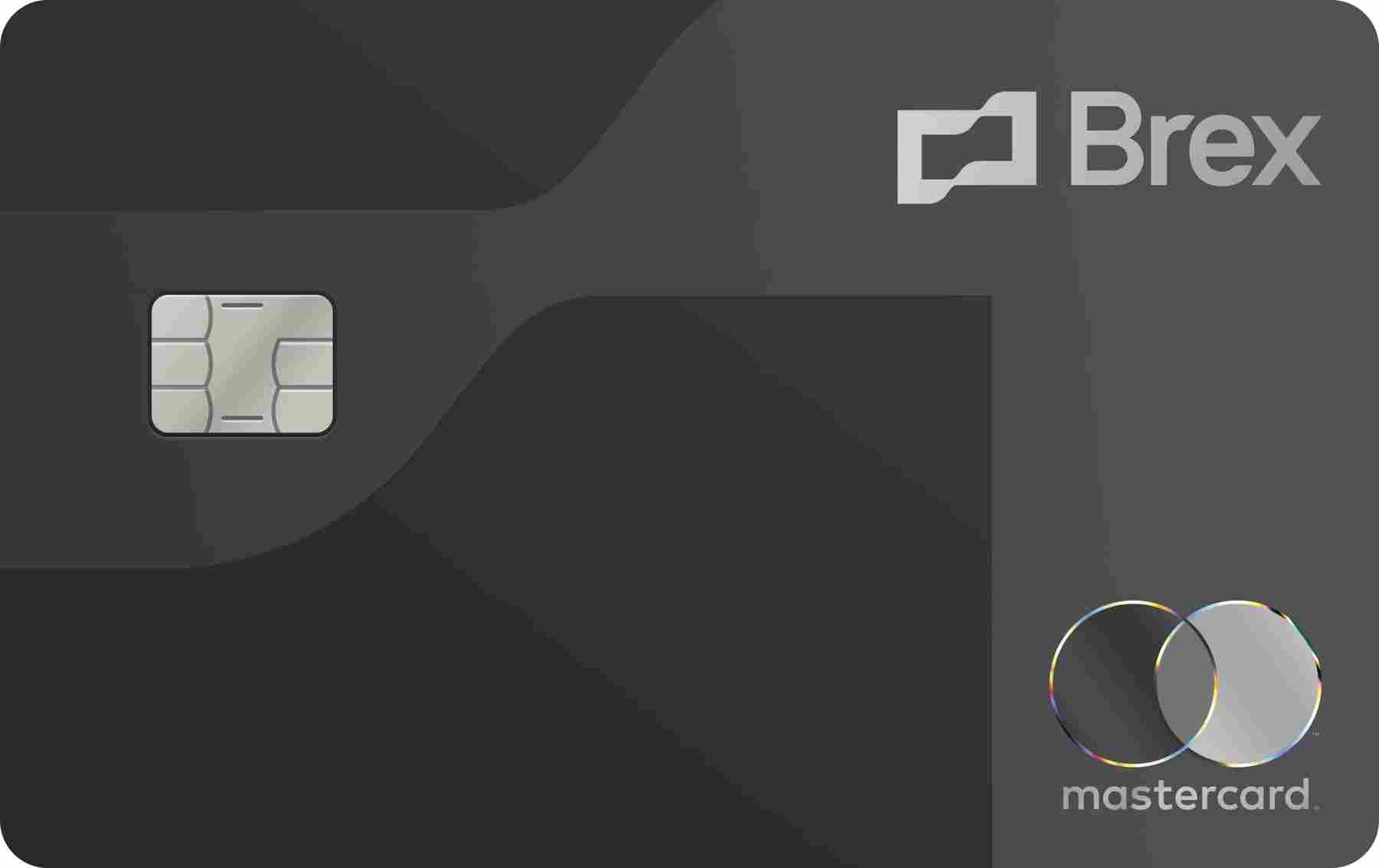
Brex Card
The bottom line:
Brex is one of the most powerful corporate cards on the market. It includes rewards, global tools and built-in banking in one platform. But it sets a high bar for approval and works best for companies that can commit to it exclusively.
Credit card details
Annual fee
$0
Regular APR
N/A
Intro APR
N/A
Rewards rate
1x-7x
Earn points on every dollar spent with industry-leading multipliers: 7x on rideshare, 4x on Brex Travel, 3x on restaurants, 2x on software subscriptions and 1x on all other transactions. Earn 3x Brex Rewards points on all eligible Apple purchases through the link or your Brex dashboard.
Points
Foreign transaction fee
0%
Intro offer
10,000
Get 10,000 points when you spend $3,000 on a Brex Card within your first 3 months.
Points
Pros & Cons
Pros
No annual fee or foreign transaction fees
New cardholder bonus offer
No personal guarantee
Card-level spending controls
Cons
Complicated rewards structure
High capital requirement for approval
Daily repayment may be required
Not available to sole proprietors
More details from Brex
Get 10,000 points when you spend $3,000 on a Brex Card within your first 3 months.
No personal guarantee needed – Brex does not ask for a personal credit check or security deposit during the application.
Credit limits 10-20x higher than traditional small business corporate cards.
Minimum bank balance of $50,000 from professional investors may be required to qualify for Brex.
Exclusive signup offers from the best products and tools for your business (e.g. AWS, Google Ads, WeWork, Salesforce) worth up to $150,000 in value.
Earn points on every dollar spent with industry-leading multipliers: 7x on rideshare, 4x on Brex Travel, 3x on restaurants, 2x on software subscriptions and 1x on all other transactions.
Earn 3x Brex Rewards points on all eligible Apple purchases through the link or your Brex dashboard.
Miles transfer program to 7 airlines (including Singapore Airlines, Qantas, Air France, and more) and their loyalty programs, giving Brex customers access to book travel across all of the major global airline alliances - Star Alliance, Oneworld, and SkyTeam.
30-day charge card running on the Mastercard network. Enjoy global acceptance with no foreign transaction fees.
Build business credit: Brex partners with Dun & Bradstreet and Experian to report your on-time payments.
Make employee expenses seamless - automated receipt-capture and expense matching and reconciliation via text, email, and mobile app. Instantly add new users and set spending limits.
Contactless pay with Apple Pay, Google Pay, and Samsung Pay.
Simplify reconciliation with built-in integrations with QuickBooks, Xero, NetSuite, and more.
The Ramp Card is a more accessible choice for bootstrapped startups. It has a lower barrier to entry than Brex — $25,000 in cash reserves vs. $50,000 — and doesn't require investor backing to qualify. But Ramp's rewards vary by customer (0%-1.5%) so it's best to confirm your rate before enrolling.
Consider BILL Divvy Corporate Card if you want tight budget control before spending happens — not after. Managers pre-load funds onto cards upfront, making overspending impossible. It has the lowest eligibility bar of any corporate card. But earning and redeeming rewards can be unnecessarily complicated.
Full review
The Brex Card was the first corporate card built for startups. And it still leads the pack today.
Brex stacks best-in-class rewards, built-in banking and global infrastructure on top of an elite expense platform. For startups and international teams, it's one of the most complete financial tools on the market.
Brex isn’t for everyone, though. That’s by design. There’s a high bar for approval. The best rewards only kick in when you use Brex exclusively. And marquee features require a subscription.
Beyond that, Brex could see major changes in the years to come. Capital One closed a deal to acquire Brex in April 2026. That deal leaves questions about what happens to the Brex platform from here.
The card is best for:
✔️ Venture-backed startups.
✔️Travel rewards.
✔️Expense management.
Card details: Brex Card
🎉 Rewards: Brex earns a base rate of 1 point per dollar. You can qualify for “multipliers” if the Brex Card is your primary corporate card.
7x on rideshare.
4x on prepaid travel booked via Brex Travel.
3x on restaurants.
2x on software subscriptions.
💰 Sign-up bonus: For NerdWallet readers:Get 10,000 points when you spend $3,000 on a Brex Card within your first 3 months.
💲 Annual fee:$0 for Essentials subscription tier. Can upgrade to Premium or Enterprise for additional fees.
💷 Foreign transaction fee: None.
Note: Brex does charge a “markup” on transactions in foreign currencies. The charges for the exchange rate can equal up to 3% of the charged amount.
🎆 Other benefits:
Automatically generates itemized receipts.
Expense management platform with AI-powered receipt matching, real-time spend alerts and custom approval workflows.
Discounts with Brex partners, including Amazon Web Services, Anthropic, GitHub, Slack and QuickBooks.
DashPass membership with 5% back in DoorDash credits when you use your Brex card.
Local cards in 50+ countries. Local currency on subscription plans.
Immediate access to virtual cards upon approval.
Where the Brex Card shines
Best-in-class rewards for travel and SaaS spend
Brex rewards are hard to beat — especially for startups that spend big on travel and software. Use Brex exclusively and you’ll earn 7x points on rideshare, 4x on travel booked through its portal, 3x on dining and 2x on software subscriptions. And there’s no cap on how many points you can earn.
The Rippling Corporate Card earns a flat 1.75% cash back. While there’s value in simplicity, you could also be leaving money on the table.
Brex point value depends on how you use them. The most popular redemption options include:
Brex Travel portal: 1 cent per point.
Statement credit / cash back: 0.6 cents per point.
Other redemption options include billboards, company-branded swag, private dining, team offsites and gift cards. In most cases, you get 1 cent per point.
You can also transfer Brex points to several airline partners — Singapore Airlines, Air France/KLM, Qantas and Avianca LifeMiles. But you don’t get a 1:1 transfer.
“Regardless of [partner] alliance, 1,500 Brex points typically transfer to 1,000 miles or points,” according to Brex’s website.
Global features (for a fee)
The Brex Card’s expense management platform handles multi-currency transactions without requiring manual conversion or third-party tools. You can issue physical and virtual cards in 60+ countries. (Though only in a single country for the free plan.)
Employees can also submit receipts in any language or currency, and Brex automatically reads and matches them to the right expense. No manual sorting, no one playing translator.
Multiple local card programs and additional features, including locally funded accounts, VAT tracking and the ability to set expense policies by market require a premium or enterprise subscription. Premium accounts cost $12 per user per month. Enterprise pricing is by quote only.
Built-in business banking
The Brex Card isn't a standalone corporate card — it comes with a full business banking layer built in. The Brex business account bundles a checking account, a high-yield Treasury account and a savings Vault with up to $6 million in FDIC coverage. You also get same-day ACH and wires, so money moves when you need it to.
This combo lets you run cash management and spending from the same dashboard. Fewer vendors, fewer logins, less reconciliation work.
And it’s an easy win for early stage companies that haven't locked in a business bank yet. Brex lets you skip that step entirely — raise a round, park the capital and start spending with controls already in place.
You're a small or early stage business without significant revenue
Brex is selective about whom it approves. In its own words, the fintech focuses on “startups and scaled companies.” That means Brex won't deny you if you have bad personal credit, unlike most traditional business cards. But approval isn't easy.
Companies need at least $1 million in annual revenue to qualify for daily payments. For monthly payments, startups need venture funding and at least $50,000 in cash reserves.
Other requirements vary by business type, but are similarly steep. Mid-market companies need annual revenue of $4.8 million, for instance. These kinds of requirements leave smaller companies out in the cold.
The Ramp Card is a better fit for bootstrapped and pre-revenue companies. It sets a slightly lower bar for approval: $25,000 in cash reserves vs $50,000 for Brex. But neither card accepts sole proprietors or unregistered businesses. If you’re still in that stage, a traditional business credit card is a better option. See our picks for best business credit cards.
You have big cash flow swings
Brex's credit model updates in real time. If your company burns through cash in a given month, the credit limit on your Brex Card will drop until you replenish your bank account.
Have daily payments? You can only spend up to the dollar amount of your Brex account balance, like a debit card. If a purchase exceeds your account balance, you'll need to transfer funds first — or risk a declined transaction.
That’s a real operational risk for seasonal and early stage companies. A business card with a fixed credit limit can offer more certainty. The Ink Business Unlimited® Credit Card is a good option for new companies. It has no annual fee, unlimited 1.5% cash back and an intro APR period that lets you carry a balance without interest if you need cash flow flexibility.
Unlike with the Brex Card, you can't apply with just your EIN. Using the Ink Business Unlimited® Credit Card won't affect your personal credit, though, provided you pay on time.
Rewards come with strings attached
The Brex Card's rewards are genuinely competitive among the best business travel cards. But the fine print matters.
The headline multipliers (7x on rideshare, 4x on Brex travel, 3x on dining, 2x on software) only apply if the Brex Card is your primary company card. Split company spending across multiple corporate cards and you lose the multipliers across the board, dropping to a flat 1 point per dollar on everything.
Brex points also lose value if you use them as cash back. The Rippling Corporate Card is a better option for straightforward, no-strings cash back. Rippling earns 1.75% cash back.
Prefer to transfer points to airline partners? You’ll lose value there too. Brex offers a 1.5:1 transfer ratio. Most other business travel cards offer 1:1 or better.
History of big changes — not for the better
Like many startups, Brex made some seismic shifts in its early days. But theirs left business owners scrambling to react.
June 2022: Brex announced it would no longer support traditional small businesses. Instead, they would focus exclusively on funded tech startups. The move forced tens of thousands of business owners off the platform. Impacted customers had less than two months to find a new business card and/or bank account.
March 2023: Brex slashed the value of points used for cash-back redemption by 40%. Points redeemed for cash dropped from 1 cent per point to 0.6 cents per point. Transfer values also dropped at this time. Cardholders had no advanced warning.
Given this history, it’s no surprise Brex customers seem skeptical about the Capital One acquisition. Many Brex customers have taken to Reddit and other online forums to voice their frustration — and seek input on alternatives.
💬 From our Nerds: The Capital One question
Capital One closed a deal to buy Brex in April 2026. The acquisition leaves question marks around what the Brex Card, and its tools, will look like in a year or two.
Acquisitions change things. Product roadmaps could shift. Pricing structures could change. Customer support could have hiccups.
None of that has happened yet, and it may not. But those are reasonable concerns. You're making a bet on a product that could look meaningfully different in 12-24 months.
—<em> Kelsey Sheehy, senior writer covering small business</em>
How we evaluated the Brex Card
NerdWallet's experts do the following for our business credit card reviews:
Compare the Brex Card to similar cards. NerdWallet’s writers and editors evaluate how the card’s rewards, perks, fees and features stack up to its peers. This is the basis of our star rating.
Get feedback from business owners. We gather insight directly from business owners when possible. We also scan online forums for discussion specific to the Brex Card. Since we cannot confirm the accuracy of these comments, they do not affect our ratings.
Survey the card’s issuer. We conduct an annual survey to get details that are less available to the public, but important for business owners. We ask about spending controls, minimum credit limits and credit limit increases, among other things.