




Updated April 24.
For more than a year, President Donald Trump's economic agenda has unfolded via a barrage of executive orders that included mass layoffs of federal workers, department closures and sweeping tariff declarations — as well as sudden reversals of those declarations.
In his second year, he launched attacks on Iran, which resulted in Iran closing the Strait of Hormuz and oil prices skyrocketing.
Trump’s rapid-fire actions have roiled financial markets and rattled consumer confidence. What remains uncertain is if the turbulence caused by his economic policies will spark a recession, as some economists have predicted.
Here are some of the key features of Trump's economy.
Attacks on Iran and gas price spikes
Oil prices surged after the U.S. and Israel attacked Iran on Feb 28, driven by the closure of the Strait of Hormuz. Supply disruptions pushed up oil prices, which prompted gas price surges in the U.S.
At the start, President Donald Trump warned the war could last four to five weeks. As gas prices continued to climb, Trump issued ultimatums to Iran to reopen the strait. Iran initially rejected a ceasefire before later agreeing to a two-week truce. Oil briefly fell below $95 per barrel following the announcement, but analysts warn gas prices could still climb above $5 per gallon if the conflict drags on.
On April 21, Trump wrote on Truth Social that he agreed with a request from the Pakistani government to extend the ceasefire pending negotiations. The U.S. blockade on the Strait of Hormuz stands.
How it affects Americans:
Gas prices continue to remain high and price hikes are likely to spread throughout the economy, stretching household budgets.
Tariffs and trade uncertainty
Tariffs are the quintessential feature of Trump’s economy. In his first year, Trump expanded sweeping tariffs on imports from nearly every country in the world, including key U.S. trade partners Mexico, Canada and China. Trump has also placed tariffs on specific goods like steel and aluminum that sit on top of his “reciprocal” tariffs. He has threatened to add more tariffs in 2026.
The levies brought the effective tariff rate to 16.8% — the highest level since 1935, according to Yale Budget Lab.
Trump argues the tariffs are necessary to protect America’s economic interests and national security.
But on Feb. 21, the Supreme Court struck down the legal basis for many of Trump's tariffs — the 1977 International Emergency Economic Powers Act (IEEPA) — as unconstitutional. Soon after, Trump said he would roll out global levies to 15% under a different statute that allows the president to enact tariffs for up to 150 days.
Before and after the ruling, businesses rushed to sue the U.S. for refunds, a legal battle likely to drag on for months to years. Consumers won't get refunds, but they could eventually see prices drop once the tariffs are fully lifted.
Read more about the decision and the uncertainty in the aftermath of the ruling here.
How it affects Americans: The additional costs from tariffs tend to pass through from importers to consumers. An analysis from Yale Budget Lab projects that Trump’s tariffs will cost the average household roughly $1,700 annually.
Mixed inflation trends
Despite some tariff-linked price hikes, inflation has largely continued to slow, extending a cooling trend since the highs of 2022.
The latest inflation rates from the consumer price index showed inflation grew at an annual rate of 3.3% in February 2026 — up from 2.4% in January and 1.3 percentage points above the Federal Reserve’s 2% target. The increase is largely due to oil price increases.
Meet MoneyNerd, your weekly news decoder
So much news. So little time. NerdWallet's new weekly newsletter makes sense of the headlines that affect your wallet.
Areas of persistent inflation include housing costs, which have continued to rise more rapidly. Among groceries, beef and coffee became more expensive, while egg prices fell after multiple years of spikes due to the avian flu. Used car and truck prices edged lower after years of continuous growth. Gas prices went down, as well, before spiking to the highest levels since 2022 after the attacks on Iran.
How it affects Americans: Even though inflation has eased, consumers may still be feeling high prices, especially for imported goods and for certain specific items that have seen significant increases in the past year. Inflation effects from the Iran War have also not been felt beyond high prices at the pump and rising airline ticket prices.
Loosening labor market
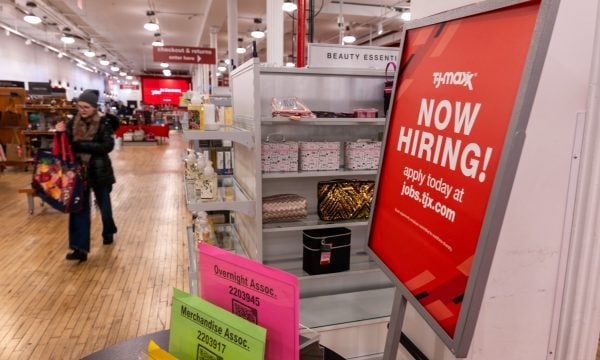
The U.S. labor market softened in 2025 as job growth and hiring slowed compared to prior years, reflecting weaker business confidence in the economy and uncertainty tied to trade and other policies.
Americans’ perceived outlook for job prospects remains grim, according to the latest Survey of Consumer Expectations by the Federal Reserve Bank of New York, which shows job-finding expectations still near record lows, even as fewer people expect to lose their jobs in the next 12 months.
How it affects Americans: A looser job market means fewer employment options. While layoffs remained fairly low, fewer openings and slower wage growth make it harder for workers to switch jobs or see higher pay.
Manufacturing employment decline
Despite Trump’s promises of a manufacturing rebirth and resurgence in the U.S. as a result of his reciprocal tariffs, federal data shows that U.S. manufacturing employment continues to fall.
How it affects Americans: The decline reflects the ongoing structural challenges of manufacturing in America, including a transition to automation, higher input costs and the unpredictability of Trump’s trade policies. Fewer manufacturing jobs means fewer opportunities and less power to negotiate income for workers in these roles. The decline also contributes to broader labor market softening for blue-collar workers.
Federal workforce slashed
Soon after Trump’s swearing-in last year, he called for the formation of the Department of Government Efficiency — DOGE — led by Elon Musk. DOGE’s job was to shrink the federal government, which led to mass job loss among federal workers.
At the start of 2025, there were 2.3 million federal employees — by the end of the year 317,000 workers had lost their jobs. In total the workforce shrank by 10.8%.
How it affects Americans: Workforce reductions meant fewer stable jobs in the federal government sector, which made it harder for hundreds of thousands of Americans and their families. Job cuts in one area also means an influx of more unemployed people competing for a smaller pool of jobs in other fields. Local economies can also suffer in areas with a high concentration of federal employees; the Washington D.C. area saw a 1.1% drop in consumer spending last year, according to the Brookings Institution, a policy think tank. Layoffs in the federal government also factor into the overall unemployment rate.
Federal Reserve under scrutiny
Trump’s nominee to replace Jerome Powell as Fed Chair when his term ends in May is Kevin Warsh, a former Fed governor with a more hawkish stance on policy at the central bank. If confirmed, Warsh would likely mark a clear shift in tone at the Fed.
Throughout 2025, Trump publicly pressured Powell to lower the federal funds rates aggressively. The Fed made three modest cuts in 2025.
On Jan. 9, long-running tensions between Trump and Powell intensified when the Justice Department subpoenaed the Federal Reserve and threatened Powell with criminal indictment related to his testimony to Congress on the renovation of the Fed’s headquarters. Powell publicly stated the subpoenas were a threat to intimidate the Fed into bowing to political pressure from the president. Trump has denied involvement with the DOJ’s actions.
On April 24, the DOJ dropped its criminal investigation into the Fed and Powell. Prior to the announcement, GOP Senator Thom Tillis said he would not support Trump’s nomination of Warsh unless the Justice Department ended its “bogus investigation.”
How it affects Americans: Threats to the Central Bank’s independence have negative consequences for inflation and the economy, at large, according to former treasury secretaries and other economic officials who issued a statement against the DOJ’s criminal inquiry. Aggressively lowering interest rates can lead to growth, but it also risks overheating the economy, which would lead to higher inflation.
» Stay informed:
- Check out NerdWallet's news hub for all the latest.
- Subscribe to one of NerdWallet's free newsletters.
The longest-ever government shutdown
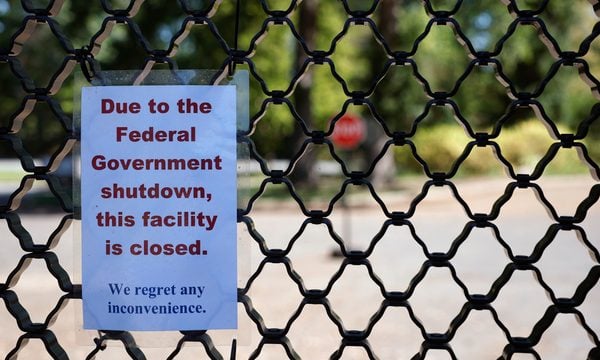
On Oct. 1, the government shut down after Congress failed to approve spending bills or a stopgap. On Nov. 5, it became the longest shutdown in history while Democrats and Republicans remained deadlocked over health care policy.
The shutdown finally ended on Nov. 12 with partial funding for certain programs through Sept. 30, 2026 and a stopgap for others.
On Feb. 14, another partial shutdown of the Department of Homeland Security began with lawmakers failing to reach an agreement to fund Immigration and Customs Enforcement (ICE) and Border Patrol.
The standoff follows a second killing of a U.S. citizen in Minneapolis by federal agents in January. Democrats have refused to allow a DHS bill to advance without reform measures.
The shutdown roiled air travel after Transportation Security Administration (TSA) workers began calling out sick en masse, forcing extensive airport delays. After 44 days, TSA agents began receiving back pay and are expected to continue being paid. The DHS remains shut down as the deadlock in Congress continues.
As of mid-April the DHS shutdown is ongoing.
How it affects Americans: During the shutdown, federal workers were furloughed; benefit programs and financial aid payments were delayed; travel disruptions led to thousands of flight cancellations and increased uncertainty among travelers; and food benefits lapsed for low-income families, straining budgets.
Airport disruptions began soon after the DHS shutdown began as TSA workers have increasingly called out sick from work. As of mid-April DHS workers were being given backpay, but future checks are not certain as the shutdown continues.
A weakening dollar
U.S. currency markets were volatile during periods of high uncertainty, but especially as Trump expanded tariffs and escalated trade tensions, which raised concerns about U.S. policy stability. The value of the U.S. dollar periodically fell against other major currencies.
So far in 2026, the dollar has kept sliding and jittery investors are looking to other safe havens such as gold, silver and the Japanese yen.
How it affects Americans: A weaker dollar means people’s money won’t go as far on imported products or when traveling abroad.
A narrower trade deficit
Trump has long vowed to reduce the trade deficit, and his tariffs on imported goods have had some impact in reducing the gap between what the U.S. buys from abroad and sells. Recent data shows the goods deficit shrunk to its lowest levels in years as imports slowed.
How it affects Americans: A smaller trade deficit can make American-manufactured goods more competitive, but it also tends to increase prices on imported consumer goods and contribute to inflation.
Lower — but not that low – mortgage rates
Throughout 2025, mortgage interest rates continued to trend down from the peaks seen in 2023, but are still roughly double the lows seen in 2021.
Freddie Mac’s Primary Mortgage Market Survey found the average 30-year fixed-rate mortgage was down from 6.96% on average in January 2025 to 6.09% on average in January 2026 — making current rates some of the lowest levels in over three years.
How it affects Americans: Lower mortgage rates relative to the recent past make buying a home and refinancing existing loans more affordable for many Americans. Spending in the housing market also contributes to economic growth.
After hitting historic lows in 2021, mortgage rates spiked in 2023 and have since declined. Most experts don’t expect to see a return to pandemic-era lows. While rates remain low by historical standards, they’re still high enough to make home ownership unattainable for many Americans.
A topsy-turvy stock market
In 2025, investors reacted to Trump’s trade policies, tariff threats and other policy uncertainty, leading to sharp swings in the markets. During turbulence, investors sold off stocks, leading to downswings, but the markets repeatedly rebounded in response to economic growth increases and resilient corporate earnings.
In 2025, the S&P rose broadly by 16.4%, though the gain was slower than the 23.3% increase in 2024.
So far in 2026, the S&P 500 has been volatile, swinging on uncertain rate-cut expectations and geopolitical tensions.
How it affects Americans: Market volatility is more stressful for households nearing retirement, as well as those who need access to savings. But in the long-term, rebounds support wealth building and retirement accounts.
Increased ICE activity affecting industries
Trump’s immigration policies have been his most divisive, marked by increases in Immigrations and Custom Enforcement (ICE) raids and violent incidents early in 2026. The increased enforcement has been linked to disruptions in areas of the labor market that depend on immigrant and migrant labor, especially agriculture, construction and hospitality.
How it affects Americans: In addition to raising humanitarian concerns, decreasing a labor pool that is concentrated in key sectors of the economy has serious economic implications. For example, in construction, fewer workers means less housing is built; in agriculture, less food is harvested.
Growth went negative, then rebounded before slowing
In the first quarter of the year, the U.S. experienced a period of negative (-0.5%) gross domestic product (GDP) driven by a simultaneous drop in consumer spending and increase in imports as businesses tried to get ahead of tariffs.
But in Q2, GDP turned around (+3.8%) as consumer spending rebounded and importers pulled back on spending. The third quarter also saw positive growth (+4.3%).
However, the fourth quarter 2025 GDP dropped substantially — final figures registered growth at 0.5%. How it affects Americans: GDP growth shows the economy is expanding, which typically means jobs are more plentiful, wages are higher and businesses are profiting. Growth is best when it’s steady. Two or more months without growth is, by definition, a recession. But rapid growth can also increase prices and make it more expensive to borrow.
(Lead photo by Kevin Dietsch/Getty Images News via Getty Images)